Early math learning plays an important role in a child’s academic development. Strong number skills help children understand mathematical concepts more easily as they progress through school.
Many families are now choosing abacus classes to support early learning and build confidence in mathematics. Through structured training and regular practice, children develop skills that extend beyond the classroom.
Understanding Abacus Learning for Children
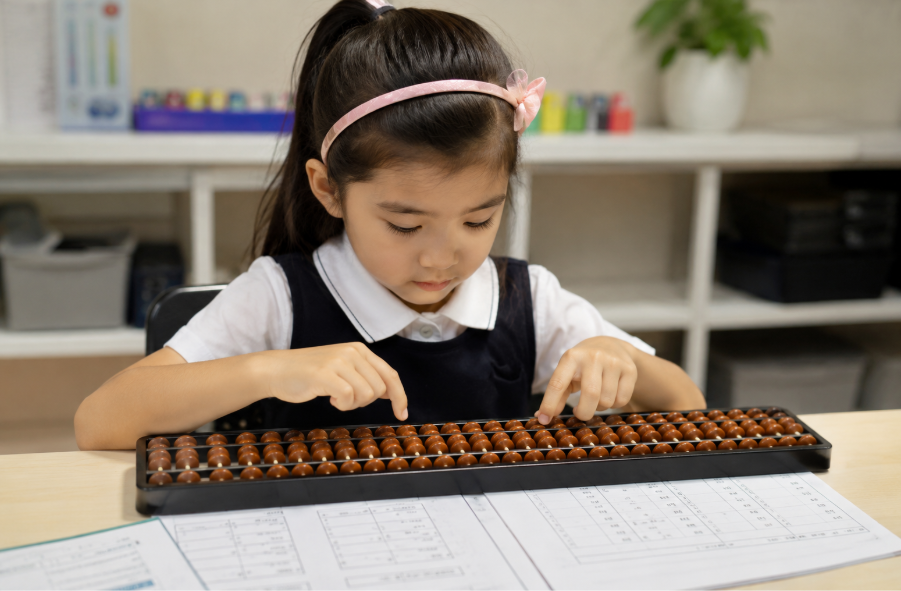
Abacus learning uses a 17-rod abacus to help children understand numbers through visualization and hands-on practice. Students gradually move from physical bead movements to mental calculation techniques.
This process strengthens number sense while helping children develop faster and more accurate calculation abilities. It also creates a strong foundation for future mathematical learning.
How Abacus Learning Works
Children begin by learning basic number concepts using the physical abacus. As their skills improve, they learn to visualize bead movements mentally and perform calculations without relying on written methods.
This step-by-step process helps children build confidence while developing strong mental math abilities.
Why Strong Math Foundations Matter from Grade 1
The early school years are an important stage for developing mathematical understanding. Children who build strong foundations often find advanced concepts easier to learn later.
Strong math skills support classroom performance and help children approach problem-solving with greater confidence and accuracy.
Early Learning Benefits
Children who develop strong number skills from Grade 1 often show better understanding of addition, subtraction, multiplication, and division.
Early learning also supports long-term academic growth. A solid foundation helps reduce math anxiety and encourages a positive attitude toward learning.
How Abacus Classes Improve Mental Math Training
Mental math training helps children solve calculations quickly without using calculators or written methods. Abacus learning strengthens this ability through visualization and structured practice.
As students progress through different levels, they become faster and more accurate when handling mathematical problems.
Developing Mental Arithmetic Skills
Mental arithmetic skills improve when children regularly practise visualizing numbers and calculations. This process helps strengthen memory, focus, and logical thinking.
Regular training also helps children become more confident when solving math problems independently.
The Role of Structured Math Learning for Kids
A structured learning approach helps children progress in an organized and consistent way. Each lesson builds on previously learned concepts, making learning easier to understand.
Structured math learning for kids provides clear goals and steady progression, helping students develop confidence throughout their learning journey.
Benefits of a Step-by-Step Learning System
Children learn best when concepts are introduced gradually. Structured learning reduces confusion and helps students master one skill before moving to the next. This creates a smoother learning experience and supports long-term improvement.
Supporting Math Enrichment Beyond the Classroom
Math enrichment programs provide additional opportunities for children to strengthen their skills outside regular school lessons.
These programs focus on deeper understanding rather than simple memorization. Abacus classes help children explore mathematical concepts through visualization and active participation.
Why Math Enrichment Is Valuable
Math enrichment encourages children to think critically and approach problems from different angles. It helps improve problem-solving skills and supports overall academic development.
Children often become more engaged and interested in learning when they experience success through enrichment activities.
Benefits of After School Programs for Children
After-school programs provide a productive learning centre environment where children can strengthen academic skills, reinforce classroom learning, and explore new concepts.
Abacus-based after school programs combine learning with structured practice to improve mathematical understanding.
Advantages of After School Learning
Regular participation helps children maintain learning consistency and develop positive study habits. It also provides opportunities for guided practice and skill reinforcement. Children benefit from additional support while building confidence in their abilities.
How Abacus Classes Help Improve Concentration
Concentration is an important skill that affects academic performance across all subjects. Abacus learning requires children to focus on calculations and bead movements carefully. This regular practice helps strengthen attention and improves the ability to stay engaged during learning activities.
Building Better Focus
Children learn to concentrate on tasks for longer periods while reducing distractions. Over time, this improved focus supports classroom learning and everyday problem-solving. Better concentration can also contribute to stronger overall academic performance.
Building Confidence Through Regular Practice
Confidence develops when children experience consistent progress. Abacus classes provide opportunities for children to achieve small milestones and gradually improve their abilities. As they become more comfortable with calculations, they gain greater confidence in handling mathematical challenges.
Confidence Building Through Achievement
Regular success helps children trust their abilities and approach new concepts with a positive mindset. This confidence often extends beyond mathematics into other areas of learning.
Children become more willing to participate, ask questions, and solve problems independently.
Cognitive Benefits of Abacus Training
Abacus learning supports several important cognitive functions. The process of visualizing bead movements engages different areas of the brain and encourages active thinking.
This strengthens memory, concentration, and logical reasoning abilities.
Skills Developed Through Abacus Learning
Children often improve:
- Memory retention
- Logical thinking skills
- Problem-solving abilities
- Visualization skills
- Mental processing speed
- Mathematical confidence
These benefits contribute to stronger overall learning development.
Creating Long-Term Academic Success
Strong mathematical skills can support future academic achievement. Children who develop good number sense early often find advanced mathematical concepts easier to understand. Abacus training helps build skills that remain valuable throughout a child’s educational journey.
Preparing for Future Learning
Regular practice strengthens mental arithmetic skills while improving focus and learning discipline. These abilities support success across multiple school subjects. Children develop a strong academic foundation that continues to benefit them as they grow.
Why Parents in Brampton Choose Abacus Classes
Many parents in Brampton are looking for effective ways to support their child’s education beyond regular school learning. Abacus classes offer a structured approach that combines math development with cognitive growth.
The focus on visualization, concentration, and mental math makes abacus learning a valuable educational investment for many families.
A Balanced Learning Approach
Abacus programs support both academic and personal development. Children improve math skills while building confidence, focus, and independent learning habits.
This balanced approach helps create positive learning experiences and long-term success.
Developing Independent Learning Skills
Abacus classes encourage children to take an active role in their learning. As they progress through different levels, they become more confident in solving problems independently and making decisions without constant guidance.
Encouraging Self-Learning
Regular practice helps children develop responsibility, patience, and self-discipline. These habits support academic growth and help them become more independent learners both in school and at home.
Benefits of Consistent Abacus Practice
Regular practice plays an important role in helping children strengthen their math abilities and cognitive skills. Consistent training allows students to build confidence while improving their overall learning performance.
Key Benefits of Regular Practice
- Improves calculation speed and accuracy
- Strengthens memory and concentration
- Builds confidence in solving math problems
- Supports long-term mental math skills
Regular practice helps children develop stronger learning habits and steady academic progress over time.
Conclusion
Abacus classes help children build strong math foundations through structured learning and regular practice. They improve mental math skills, concentration, confidence, and problem-solving abilities.
For families in Brampton, abacus training offers valuable support for long-term academic growth and learning success. Contact Abacus Master Canada to learn more about the abacus training programs.
FAQs
1. What age should children start abacus classes?
Many children begin abacus learning around Grade 1, typically between 5 and 7 years of age.
2. How do abacus classes improve mental math skills?
Children learn to visualize bead movements mentally, helping them solve calculations faster and more accurately.
3. Are abacus classes useful for math enrichment?
Yes, abacus learning supports math enrichment by strengthening number sense, problem-solving skills, and mathematical understanding.
4. How do after school programs support learning?
After school programs provide additional practice, reinforce classroom concepts, and help children build consistent learning habits.
5. Can abacus classes help improve concentration in children?
Yes, regular abacus practice strengthens focus and attention by requiring children to concentrate carefully during calculations.