Many Canadian parents are searching for ways to help their kids build stronger math skills without adding more stress to homework time. That is where abacus training comes in. It is a simple tool with a long history, and it has helped children around the world understand numbers in a more natural, hands on way. If you are exploring options in this space, Abacus Master Canada is one of the names parents often come across, and for good reason. Abacus Master Canada focuses on teaching kids how to calculate using mental math techniques built on the traditional abacus, and this guide will walk you through everything you need to know before choosing a program for your child. Explore our range of programs to find the right fit for your child’s age and skill level.
What Is an Abacus and Why Does It Still Matter Today
An abacus is a small counting frame with beads that slide along rods. It looks old fashioned, almost like a toy, but it is actually one of the oldest calculation tools in human history. What makes it valuable today is not the frame itself, but the mental process a child builds while using it.
As kids move the beads, they start forming a picture of numbers in their mind. Over time, this turns into what is often called mental math or visualization. A child can eventually solve calculations in their head, picturing the abacus beads moving without the physical tool in front of them. This is why abacus training is still relevant in a world full of calculators and smartphones. It is not about replacing technology, it is about training the brain to think quickly, logically and independently.
Why Parents Across Canada Are Choosing Abacus Classes
Abacus classes for kids are gaining attention across Canadian cities, and it is not just a trend. Parents are noticing real changes in how their children approach problems, both in math class and in daily life.
Building Strong Math Skills for Kids
The most obvious benefit is stronger math skills for kids. Addition, subtraction, multiplication and division become less intimidating once a child has a visual and physical method to fall back on. Instead of memorizing steps without understanding them, kids start to see how numbers actually work together.
Boosting Focus and Concentration
Abacus practice requires attention. A child has to watch the beads, follow instructions and keep track of numbers at the same time. Many parents report that this kind of practice carries over into schoolwork, helping kids sit still and concentrate for longer periods.
Confidence That Carries Into the Classroom
When a child understands math instead of just memorizing it, their confidence tends to grow. They raise their hand more often, they attempt harder questions, and they stop associating math with fear or frustration.
What to Expect from an Abacus Learning Centre
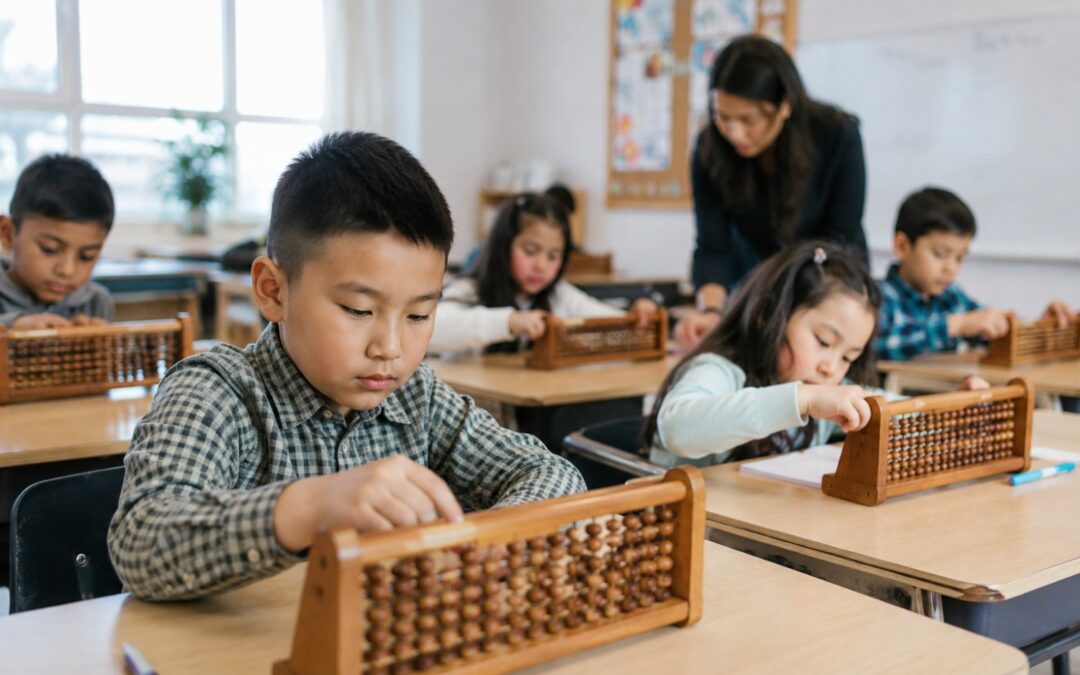
If you have never visited an abacus learning centre before, the setup is usually simple and welcoming. Classes are typically small, which allows instructors to give one on one attention to each child. Sessions often include a warm up, a lesson on a new concept, guided practice and then some form of friendly competition or game to keep things light.
Most centres group children by age and skill level rather than grade, since abacus learning does not always follow the same pace as school math. A five year old and an eight year old might start at a similar point depending on their comfort with numbers.
Here is what a typical abacus learning centre usually offers:
- Small group or one on one class formats
- Trained instructors familiar with child learning patterns
- Practice worksheets for home use between sessions
- Regular assessments to track progress
- A structured path from beginner to advanced levels
Abacus Classes as After School Learning
For working parents, fitting in another activity can feel overwhelming. This is why abacus classes work so well as after school learning. Sessions are usually scheduled in the evening or on weekends, so there is no need to pull a child out of regular school hours.
After school learning programs like this also give children a healthy way to transition from a full day at school into a focused, engaging activity rather than passive screen time. It becomes part of a routine rather than one more thing to squeeze in.
Many parents find that once their child settles into a weekly rhythm, the abacus class becomes something they look forward to rather than something they are told to attend. The mix of games, friendly rivalry with classmates and visible progress keeps motivation high.
Choosing the Right Children’s Math Program for Your Child
Not every children’s math program is built the same way, so it helps to know what to look for before signing up.
Consider the following when comparing programs:
- Class size and how much individual attention your child will get
- Whether instructors are trained specifically in abacus methods
- How progress is measured and communicated to parents
- The flexibility of scheduling around school and other activities
- Whether trial classes are available before a full commitment
A good children’s math program should feel supportive rather than pressured. The goal is steady improvement, not turning every session into a test.
How Abacus Master Canada Structures Its Classes
Abacus Master Canada builds its curriculum around gradual, level based learning. Rather than rushing children into complex calculations, the program introduces concepts in stages, giving kids time to build a solid foundation before moving forward.
Classes typically combine live instruction with practice exercises, and instructors keep track of each child’s pace so that nobody feels rushed or left behind. Parents are usually kept informed through regular updates, which makes it easier to see how a child is progressing over weeks and months rather than guessing.
The structure is designed to fit around a family’s existing schedule, which is one reason it works well alongside regular school commitments and other extracurricular activities.
Common Questions Parents Ask Before Enrolling
Before committing to any program, most parents want a bit more clarity on the day to day details. Here are a few things worth asking directly:
- How long is each class session
- What age range is the program designed for
- How often are classes held each week
- What kind of practice is expected at home
- How is progress measured over time
Asking these questions upfront usually saves confusion later and helps set realistic expectations for both parent and child.
A Quick Look at the Learning Timeline
Abacus learning is not an overnight process, and it helps to understand this before starting. Most children begin noticing small improvements within the first few months, such as faster recall of basic addition and subtraction. More noticeable mental math skills, where a child can calculate without looking at the abacus, usually develop after sustained practice over a longer stretch of time.
Patience matters here. Every child moves at their own pace, and comparing progress to classmates rarely helps. The focus should stay on steady, personal improvement rather than speed alone.
Final Thoughts for Parents
Choosing an activity that genuinely benefits your child, without adding unnecessary pressure, is not always easy. Abacus classes offer a rare mix of practical math skills, improved focus and a confidence boost that often shows up well beyond the classroom.
If you are exploring options for your child and want a program built around structured, level based learning with proper support along the way, it is worth learning more about what is available near you. You can explore the programs directly or get in touch Us to ask questions before making a decision.
Frequently Asked Questions
1. What age should a child start abacus classes
Most programs accept children from around age five or six, once they are comfortable with basic number recognition. Some centres do accept slightly younger children depending on readiness.
2. How long does it take to see results from abacus training
Many parents notice small improvements in speed and accuracy within a few months, while stronger mental math ability typically develops over a longer period of consistent practice.
3. Do kids need to buy their own abacus
Most learning centres provide one during class, and many recommend a personal one for home practice, which is usually affordable and easy to find.
4. Is abacus learning only useful for math class
While math is the main focus, many parents report improvements in focus, memory and overall confidence that carry into other subjects and daily activities as well.
5. How many days a week are classes usually held
This varies by program, but most offer one or two sessions per week, which is enough to build steady progress without overwhelming a child’s schedule.