
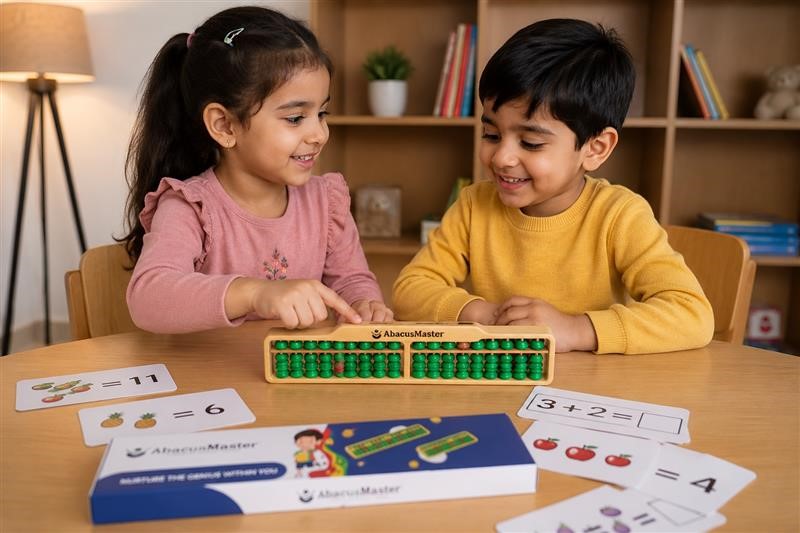
Abacus-based learning uses a 17-rod abacus to develop strong numeracy skills through bead visualization. It helps children shift from physical counting to mental arithmetic with better understanding.
The program follows an 8-level structured system with assessments and certification, improving speed, accuracy, and problem-solving ability through gradual progression.
Understanding Mental Math in Early Learning
Mental math means solving calculations without calculators or written steps, helping children think actively and perform calculations in their mind. It builds a deeper understanding of numbers by focusing on logic instead of memorizing steps.
Many parents choose mental math programs for kids and online abacus classes for early learning support. These programs follow a structured approach, allowing children to learn at their own pace without pressure.
Key Elements of Mental Math Learning
Mental math is built on a few important concepts that support long-term understanding. It helps children develop strong number sense and improves their ability to solve problems quickly. Regular practice of these concepts builds confidence and accuracy over time.
Core Elements
Core elements of mental math include understanding number relationships, quick calculation techniques, logical thinking skills, pattern recognition, and consistent practice. Each of these plays an important role in strengthening math skills and building a strong foundation for long-term learning.
Improving Numeracy Skills Through Mental Math
Numeracy is an essential skill for academic success. It helps children understand numbers, calculations, and problem-solving. Mental math strengthens numeracy by improving how children interact with numbers daily. With regular practice, children become more comfortable solving problems quickly.
How Mental Math Supports Numeracy
Mental math supports numeracy by improving number sense, increasing calculation speed, building accuracy, encouraging active thinking, and supporting classroom performance. This leads to better learning outcomes and makes everyday tasks easier for children.
Building Confidence in Young Learners
Confidence develops when children learn through structured abacus-based mental math training. As they use the 17-rod abacus and gradually shift to mental visualization, they become more comfortable handling numbers without hesitation.
Many children initially hesitate with calculations, but regular abacus practice helps reduce this fear. Step-by-step progression across levels encourages them to solve problems independently and trust their calculation ability.
How Confidence Develops
- Builds independent problem-solving using abacus visualization
- Reduces fear of making calculation errors
- Improves speed through regular level-based practice
- Creates a sense of achievement after each completed level
- Encourages consistent and positive learning habits
With continuous practice in structured abacus programs, children gradually become faster and more confident in solving mathematical problems in daily learning situations.
Supporting Cognitive Development
Mental math strengthens key brain functions while improving calculation skills. Regular practice enhances memory, focus, logical thinking, and problem-solving abilities. It also improves concentration and supports overall academic performance.
Abacus-Based Learning Progression
The Abacus program follows an 8-level structure from elementary to advanced stages. Students begin with basic number concepts using the 17-rod abacus and gradually develop mental visualization and faster calculations. Each level includes practice, assessment, and certification before progressing further.
- Levels 1–2 focus on basic number understanding and introduction to the abacus.
- Levels 3–5 develop visualization and faster mental calculations.
- Levels 6–8 focus on advanced mental arithmetic including multiplication, division, fractions, LCM, and HCF.
This structured progression ensures steady skill development and long-term improvement in mathematical ability.
Role of Structured Learning Programs
A structured approach makes learning more effective by providing clear direction and steady skill development. It helps children progress from basic concepts to advanced mental math with confidence. Many families prefer online mental math classes as they combine flexible online learning with practical training support through offline centres.
Features of Structured Learning
Structured learning follows a clear, step-by-step progression based on the learner’s age and understanding. It includes regular practice, guided instruction, and continuous skill development to support steady improvement and consistency.
It also ensures the same learning experience across all locations, including upcoming model centres like Surrey, maintaining uniform training quality everywhere.
Importance of Consistent Practice
Practice is essential for improving mental math skills in children as it helps strengthen understanding and build accuracy. With regular practice, children become faster in calculations and develop better focus and confidence. A consistent routine also makes problem-solving more natural over time.
Benefits of Consistency
Consistent practice strengthens understanding and improves calculation speed and accuracy. It builds regular learning habits, encourages active thinking, and supports long-term progress in mental math learning.
Role of Parents in Developing Mental Math Skills
Parents play an important role in shaping a child’s learning journey. Their support helps children stay motivated and consistent. Many also explore the teacher training program to better understand learning methods and support their child more effectively.
How Parents Can Help
Parents can support learning by setting a daily study routine, encouraging practice without pressure, and monitoring progress regularly. Creating a distraction-free environment and celebrating small achievements helps children stay motivated, engaged, and confident in their learning.
Creating a Positive Learning Environment
A calm and supportive environment helps children focus better, reduces learning stress, and improves concentration during practice.
Key Factors for Better Learning
A quiet study space and a fixed daily routine help build focus and learning discipline. Parental encouragement keeps children motivated and confident. A balanced routine prevents overload, while positive reinforcement and regular guidance improve focus, confidence, and overall learning outcomes.
Why Mental Math Is Important in Modern Education
Modern education focuses on skills beyond textbooks, encouraging children to think critically and solve problems independently.
Mental math supports this by strengthening logical thinking and calculation abilities. It helps children handle academic challenges and real-life problem-solving with greater confidence. Early numeracy development is closely linked to long-term academic success, which is why many families are moving toward structured skill-based learning.
Real-World Application Through Abacus Learning
Abacus learning helps children apply mathematical thinking in practical situations by improving their ability to visualize numbers mentally. This strengthens their problem-solving approach and helps them handle calculations with more clarity.
With regular practice, children develop better understanding of arithmetic concepts and become more confident in solving everyday math tasks with accuracy and ease.
Strengthening Attention and Mental Discipline
Mental math improves attention and mental discipline by training children to solve calculations step by step in their mind with full focus. This process strengthens concentration and helps develop better control over thinking. With regular practice, children build stronger attention spans, reduce careless mistakes, and learn to solve problems more accurately by thinking in a clear and structured way.
Key Improvements
These improvements include better focus during tasks, improved mental discipline, reduced careless errors, a stronger thinking process, and increased patience in problem-solving. Together, they support not only math learning but also overall academic performance.
Conclusion
The importance of mental math skills continues to grow in today’s education system. These skills help children improve numeracy, build confidence, and develop strong thinking abilities. Contact Abacus Master Canada for guidance on abacus and math learning programs.
With the right approach and consistent practice, children can build a strong foundation for future learning. Mental math goes beyond numbers and supports overall cognitive development, making it an essential part of early education.
FAQs
1. Why are mental math skills important for children?
They improve calculation speed, accuracy, and overall understanding of numbers.
2. At what age should children start learning mental math?
Children can start during early learning stages, usually around Grade 1 or earlier.
3. How does mental math improve confidence?
It helps children solve problems independently, reducing hesitation and fear.
4. Are mental math programs effective?
Yes, regular practice improves speed, accuracy, and problem-solving skills.
5. How can parents support mental math learning at home?
By encouraging daily practice, setting routines, and creating a positive learning environment.