If you have ever watched a child solve a math problem in their head without writing a single number down, you have probably witnessed the result of mental abacus training in action. This approach has quietly become one of the most talked-about methods among parents who want their children to build real number confidence rather than simply memorizing formulas for a test. At AbacusMaster Canada, we work with families who want their children to think faster, focus longer, and enjoy math instead of dreading it. In this article, we want to walk you through how this training actually works, why it produces such noticeable results, and how you can explore our teaching approach to see if it fits your child’s learning style.
What Mental Abacus Training Actually Means
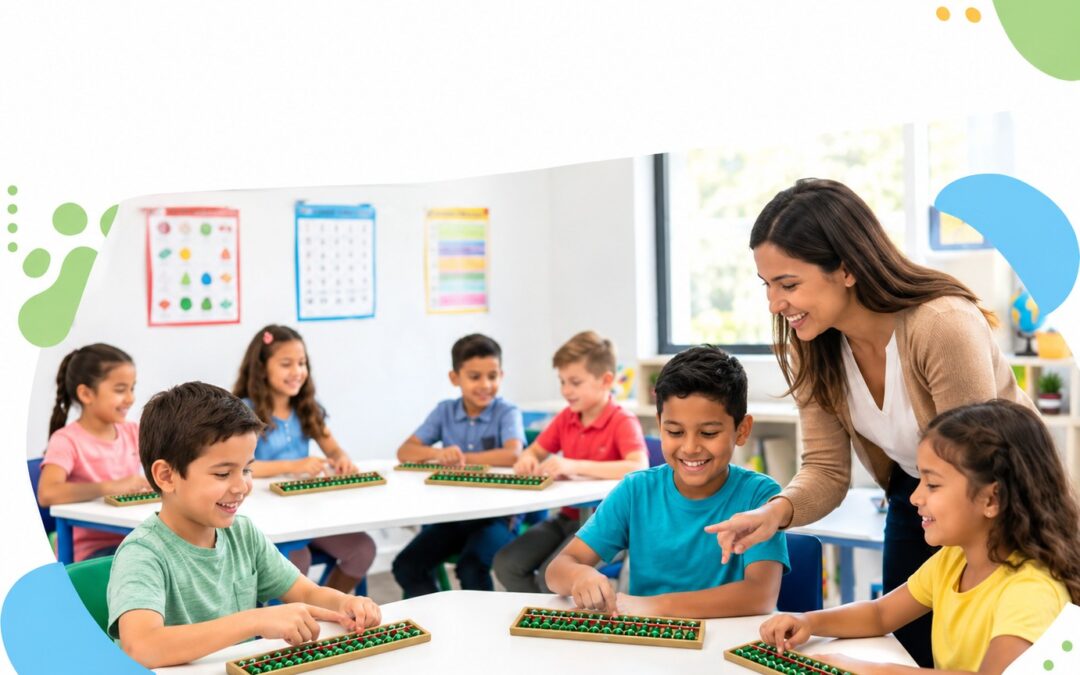
Mental abacus training starts with a physical tool, the abacus itself, where a child learns to move beads to represent numbers and perform calculations. Over time, something interesting happens. The child no longer needs the physical tool in front of them. They begin to picture the abacus in their mind and manipulate imaginary beads to solve problems, often faster than they could on paper.
This shift from physical practice to mental imagery is the heart of the method. It is not about rote memorization of answers. It is about training the brain to hold a visual model of numbers and work with that model fluidly. Once a child reaches this stage, calculations that once felt like a chore start to feel almost automatic.
The Role of Visualization Techniques in Learning
Visualization techniques are central to why this method works so well for young learners. Instead of relying purely on abstract symbols on a page, children learn to associate numbers with a physical, spatial layout they can picture clearly. This taps into a different part of the brain than traditional rote arithmetic, one that is often more natural for children to engage with.
We have found that this visual approach tends to help in a few specific ways.
- It gives children a concrete mental anchor for numbers instead of an abstract concept
- It reduces reliance on finger counting or repetitive written steps
- It builds a habit of picturing problems before attempting to solve them
- It strengthens the connection between visual memory and numerical reasoning
Over weeks of consistent practice, this visual habit becomes second nature, and children start applying it automatically whenever they face a math problem, whether at school or at home.
Why Memory Improvement Matters So Much in Early Education
Memory improvement is one of the most underrated benefits of this kind of training. Many parents come to us focused purely on math scores, but what often surprises them is how much their child’s memory sharpens along the way. Holding a mental image of an abacus while performing calculations requires the brain to retain and update information constantly, almost like a mental workout.
This kind of repeated mental exercise tends to strengthen working memory, which is the type of memory children rely on for everything from following multi-step instructions to recalling spelling words during a test. A child who practices mental abacus work regularly is essentially training a skill that extends well beyond the math classroom.
How This Training Leads to Faster Calculations
One of the most immediately visible outcomes of this method is faster calculations. Children who train consistently often reach a point where they can add, subtract, multiply, or divide numbers in their head at a speed that surprises both parents and teachers. This is not a party trick. It reflects a genuine improvement in how efficiently their brain processes numerical information.
Speed develops gradually, and we always remind parents not to rush this part of the journey. A typical progression looks something like this.
- The child starts by learning basic bead movements on the physical abacus
- They practice simple addition and subtraction until movements feel natural
- They begin performing calculations without looking directly at the abacus
- They transition to picturing the abacus mentally while solving problems
- They gradually increase the complexity and speed of the calculations attempted
Each stage builds on the one before it, and skipping steps tends to slow progress rather than speed it up. Patience during the early stages pays off significantly once a child reaches the mental calculation phase.
Building Concentration Skills Alongside Math Ability
Concentration skills often improve alongside calculation speed, and this is something many parents notice even before they see a jump in math grades. Mental abacus work requires sustained attention, since even a brief lapse in focus can throw off an entire calculation. Over time, children essentially train their attention span the same way they train their number sense.
We have seen this play out in classrooms in a few consistent ways.
- Students sit through longer stretches of focused work without becoming restless
- They recover more quickly from small mistakes instead of losing focus entirely
- They show improved listening skills, particularly during exercises involving numbers read aloud
- They carry this improved focus into other subjects, not just math
Parents frequently tell us that homework time becomes noticeably calmer once their child has been practicing for a few months, simply because the child has developed a stronger ability to sit and concentrate on one task at a time. If you want to see how our lesson structure supports this kind of steady skill building, you can explore our structured learning programs built around each stage of a child’s development.
Practicing Outside the Classroom
Consistency outside of class hours plays a big role in how quickly a child progresses through the mental calculation stages. We always encourage parents to build a light, sustainable practice routine at home rather than pushing for long study sessions that can lead to burnout.
A few simple habits tend to make a real difference.
- Practicing for ten to fifteen minutes a few times a week rather than cramming once a week
- Turning practice into a light, low-pressure activity rather than a strict obligation
- Encouraging your child to explain their calculation process out loud
- Celebrating small improvements in speed or accuracy rather than focusing only on perfection
Many of our students also use guided practice tools between classes to reinforce what they learn during their sessions. If you are looking for a way to support your child’s practice at home, our online practice portal is designed to make that kind of consistent, low-pressure repetition easier to maintain.
Common Questions Parents Ask Before Starting
We understand that trying a new learning method can feel like a big decision, especially when it comes to something as important as your child’s relationship with math. A few concerns come up regularly in our conversations with parents.
Some parents worry their child is not naturally good at math and wonder if this training will still help. In our experience, this method often benefits those children the most, since it gives them a different, more visual way to approach numbers instead of relying purely on memorization.
Other parents ask whether this training might conflict with what their child learns at school. It generally does not. Most children find that the mental math skills they build actually make their regular schoolwork feel easier, since calculations that once required careful, slow steps start to happen much more quickly and with fewer errors.
Final Thoughts
Mental abacus training offers something that few other early learning methods manage to combine so effectively, which is a genuine boost in calculation speed, memory, and focus, all built through a method that feels engaging rather than repetitive for children. It is a skill that grows steadily over time and tends to support a child’s confidence well beyond the math classroom. If this approach sounds like something your child would benefit from, we would be glad to answer your questions and help you figure out the right starting point. Feel free to get in touch with our team whenever you are ready to take the next step.
Frequently Asked Questions
1. What age is best to start mental abacus training?
Children can start mental abacus training from age 6 and above, depending on their readiness and learning needs.
2. How long does it take before a child can calculate mentally without the abacus?
This varies by child, but many students begin showing early signs of mental calculation within a few months of consistent practice, with fluency developing gradually over a year or more.
3. Does this training replace the math my child learns at school? No, it works alongside school learning and often makes regular classroom math feel easier and faster for the child.
4. Is mental abacus training only useful for gifted or advanced students?
Not at all; it is designed to help children of all skill levels, and many students who initially struggle with math see some of the greatest improvements.
5. How can I support my child’s progress between classes?
Short, regular practice sessions at home, combined with a calm and encouraging attitude toward mistakes, tend to support steady progress most effectively.