We live in a world where technological advancements are making information more accessible than ever before. Search engines, calculators, and generative AI tools can provide answers within seconds, often faster than individuals can fully process the question itself.
Emerging research suggests that prolonged dependence on AI-assisted tools may be associated with increased cognitive offloading, reduced metacognitive engagement, and a diminished tendency to actively retain or manipulate information. This may also reduce opportunities for children to engage in critical thinking, creativity, problem-solving, and independent reasoning. At the same time, AI offers significant benefits, including personalised learning, improved accessibility, and greater educational support. The challenge, therefore, is not the technology itself, but ensuring that easy access to answers does not replace the cognitive processes involved in understanding them.
This raises an important question: In a world where answers are increasingly available at the click of a button, do students still need to learn how those answers are reached?
There is a significant difference between learning and absorbing the answers that are readily provided. Right now, we naturally offload tasks to tools – calculators, GPS, search engines, and now, AI. Although it may seem an efficient approach to workload, it does not always contribute to learning. In young minds, learning occurs when information is manipulated, knowledge is retrieved, connections are made and problems are solved. Understanding is built through cognitive effort, and for species such as ours, that is an important factor to brain development.
As a result, education today must focus not only on knowledge acquisition, but also on developing the skills needed to interpret, evaluate, and apply information.
Research highlights the importance of cognitive abilities such as working memory, executive functioning, and pattern recognition. These skills help students process information, identify relationships, solve problems, and think independently.
Unlike information consumption, students learn by making connections, exploring patterns, and working through challenges themselves.
This is where mental mathematics remains relevant, where it requires students to recognize patterns, hold information in mind, and arrive at solutions through their own reasoning.
The value of mental mathematics, therefore, extends far beyond calculation speed.
If these cognitive skills remain important in the age of AI, the next question becomes: how can they be nurtured?
One approach is through learning experiences that require students to actively engage with numbers rather than simply consume answers.
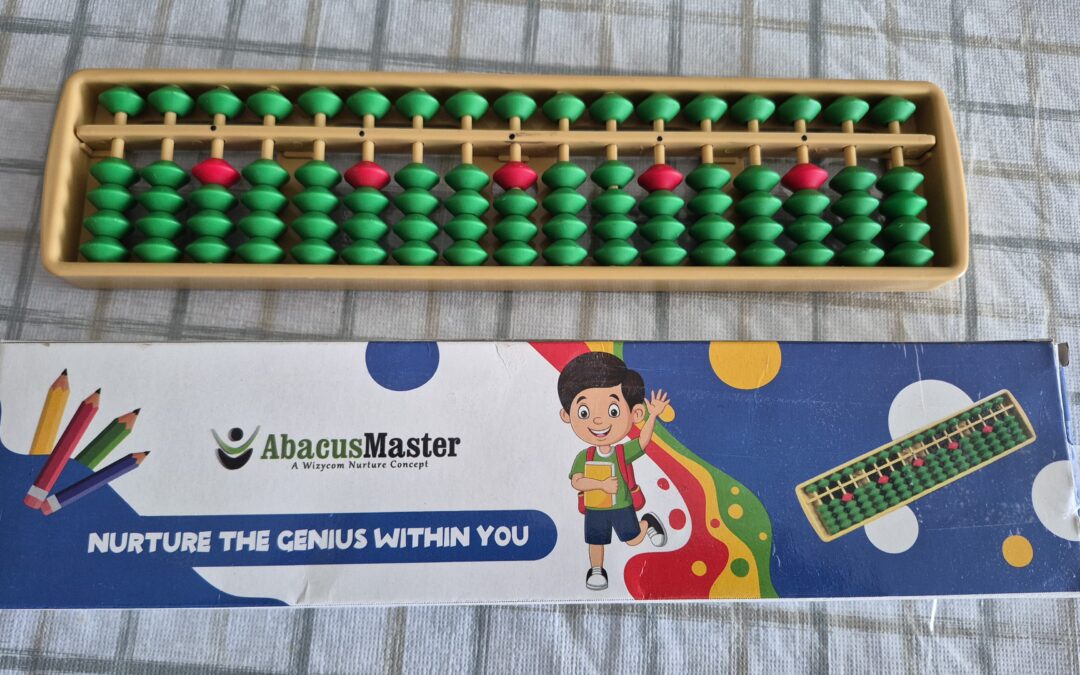
Programs such as Abacus training gradually moves students from manipulating physical beads to visualizing them mentally, requiring sustained attention and active engagement. Vedic Math, on the other hand, introduces students to numerical patterns and calculation strategies that encourage flexible thinking and efficient problem-solving.
While the methods differ, both approaches place emphasis on the thinking process itself.
At Abacus Master Canada, we believe that education should go beyond finding answers. Through structured Abacus and Vedic Math programs, students are encouraged to strengthen concentration, develop numerical confidence, recognize patterns, and actively engage with the learning process.
In a world where answers are everywhere, helping children learn how to think may be one of the most valuable investments we can make in their future.

Written by :
Divya Satish
Research, Writing & Content Strategy Intern, AbacusMaster Canada
Divya is an aspiring researcher and writer interested in education, psychology, leadership, and the stories that shape people. She enjoys combining research and reflection to create thoughtful, engaging content.