
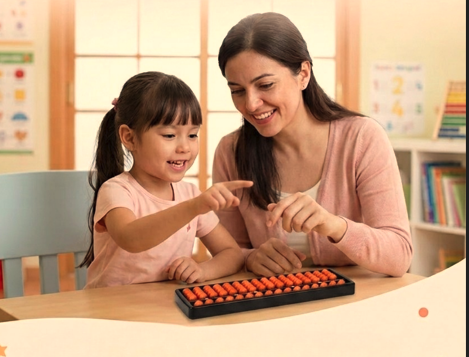
Choosing an educational program for your child involves more than looking at subjects and schedules. Parents want to understand how children learn, what activities they complete, and how a program supports their academic development. An abacus class offers a structured way for children to explore numbers, practise calculations, and gradually develop mental math skills.
For parents considering abacus classes, understanding what happens during a typical lesson can make the decision easier. From learning to move beads on an abacus to solving calculations mentally, every stage introduces skills that children can practise and strengthen over time.
What Is an Abacus Class?
An abacus class teaches children to use a counting tool with movable beads to understand numbers and perform arithmetic calculations. With guided practice, children learn how to represent numbers, move beads according to mathematical rules, and solve increasingly challenging problems.
As their familiarity grows, students may begin visualising the abacus in their minds. This approach is commonly associated with mental abacus training, where learners practise calculations without physically moving the beads.
Parents interested in the fundamentals can also explore this guide to learning abacus to understand how the learning process develops.
What Happens During a Typical Abacus Lesson?
Although lesson formats vary by program and learning level, an abacus class generally includes several activities designed to help children practise and build their skills.
1. Warm-Up Activities and Number Recognition
A lesson may begin with a short warm-up involving number recognition, counting, or simple arithmetic questions. These activities help children settle into the lesson and revisit concepts they have already learned.
For beginners, the teacher may introduce number values and demonstrate how the beads represent different quantities. Children gradually become familiar with the tool before moving on to more complex calculations.
2. Learning to Use the Abacus
Once children understand the basics, they practise moving beads to represent numbers and perform calculations.
The teacher demonstrates a technique, explains the steps, and allows students to practise with guidance. Children may begin with simple addition and subtraction before progressing to more challenging operations as their skills improve.
Repeated practice helps learners become more comfortable with number representation and calculation procedures.
3. Guided Arithmetic Practice
After learning a technique, students apply it to a series of questions. They may solve examples with the teacher before attempting similar problems independently.
This stage gives children an opportunity to identify mistakes, understand calculation steps, and develop a consistent approach to solving problems.
The difficulty of the exercises should increase gradually so that students can build on previously learned concepts rather than feeling overwhelmed.
4. Developing Mental Math Skills
As children become more familiar with the abacus, some programs introduce mental visualisation exercises. Students practise imagining the beads and mentally moving them to work through calculations.
This progression can support the development of mental arithmetic skills, although progress varies depending on the child’s practice, readiness, and learning pace.
For a deeper look at this process, parents can read about mental abacus training.
5. Timed Exercises and Skill Reinforcement
Some abacus lessons include timed activities or short calculation challenges. These exercises encourage students to apply familiar techniques with increasing efficiency.
Speed should not be the only measure of progress. Accuracy, understanding, and the ability to explain a calculation are also important parts of learning.
Children benefit when challenges are appropriate for their current level and mistakes are treated as opportunities to improve.
6. Review, Feedback, and Home Practice
At the end of a lesson, students may review the concepts they have learned and practise questions related to the session.
Teachers may also suggest short home-practice activities. Regular practice helps children revisit techniques between classes and identify areas where they need additional support.
Parents can encourage this process by providing a quiet practice space, celebrating effort, and maintaining a positive attitude toward mistakes.
What Skills Can Children Develop Through Abacus Learning?
An abacus program focuses on arithmetic, but regular participation may also help children practise other useful learning habits.
Number Sense and Calculation Accuracy
Working with beads gives children a visual way to represent numbers and understand how quantities change during calculations. With consistent practice, learners can become more familiar with arithmetic procedures.
Concentration and Attention
Following calculation steps requires children to focus on the task and pay attention to the movement or visualisation of beads. Structured exercises provide opportunities to practise sustained attention.
Confidence and Independence
As children learn new techniques and solve problems independently, they may become more comfortable approaching mathematical tasks. Progress is individual, and encouragement can help children recognise their achievements.
Problem-Solving and Persistence
Some calculations require several steps. Working through these problems gives children opportunities to practise patience, follow instructions, and try different approaches when they make mistakes.
Abacus learning is a supplementary educational activity, not a guaranteed solution for every academic difficulty. Its value depends on the quality of instruction, regular practice, and how well the program meets the child’s needs.
How Can Parents Support Their Child’s Learning Journey?
Parents do not need to be mathematics experts to encourage progress. A few simple habits can make practice more positive and consistent.
- Encourage regular practice: Short, manageable sessions can help children revisit what they have learned.
- Focus on understanding: Ask your child to explain how they solved a question rather than concentrating only on speed.
- Celebrate effort: Recognise persistence, improvement, and careful work.
- Make numbers part of everyday life: Use shopping totals, counting games, and simple calculations during daily activities.
- Communicate with the teacher: Ask about your child’s progress, strengths, and areas that need more practice.
The right learning environment should offer age-appropriate instruction, clear guidance, and opportunities for children to progress at a manageable pace.
How Do You Choose the Right Abacus Program?
Before enrolling your child, consider the teaching approach, class format, practice expectations, and level of individual guidance available.
Ask whether lessons are suitable for your child’s age and current arithmetic skills. You should also understand how the program monitors progress and communicates with parents.
Families exploring local options can learn more about abacus classes in Oshawa if they are looking for a program in that area.
For children who need a different learning approach, it is also helpful to discuss their specific challenges with the instructor and, where appropriate, their schoolteacher.
What Comes Next in Your Child’s Abacus Journey?
An abacus class is a learning process rather than a one-time activity. Children typically begin with number recognition and basic bead movements, then practise arithmetic techniques before progressing toward more independent and mental calculations.
The pace of progress depends on each learner. Consistent practice, supportive instruction, and realistic expectations help children build their skills without unnecessary pressure.
If you would like to understand how abacus learning can improve your child’s math skills, read our related guide: How Does Abacus Learning Lead to a Better Understanding of Math Calculation?.
Conclusion
Understanding what happens inside an abacus class helps parents make informed decisions about their child’s education. Lessons may combine demonstrations, hands-on bead practice, arithmetic exercises, mental visualisation, and regular feedback.
With an appropriate program and consistent effort, children can strengthen their familiarity with numbers and practise valuable learning habits. The goal is not simply to calculate faster but to develop understanding, persistence, and a more comfortable approach to mathematics.