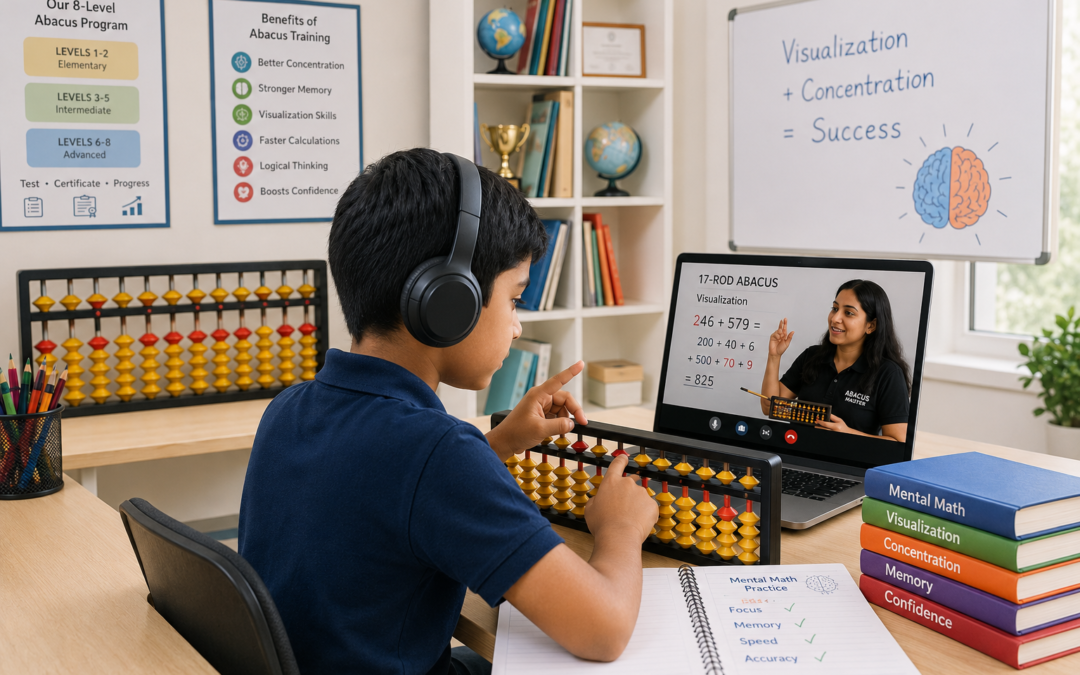
Online abacus classes are becoming an effective learning solution for children aged 6 and above. These programs combine mental arithmetic training with visualization techniques to support healthy brain development during important learning years.
Using a structured 17-rod abacus system, children gradually move from physical counting to mental calculations. This process strengthens focus, memory, logical thinking, and problem-solving abilities while building confidence in mathematics.
Understanding Online Abacus Training
Online abacus training teaches children how to perform calculations using a 17-rod abacus before progressing to mental visualization. Rather than memorizing formulas, students learn to picture bead movements in their minds.
This approach develops stronger number sense and encourages active thinking. It also helps children build a solid foundation for future academic learning.
How the Learning Process Works
Children begin with basic number recognition and simple calculations using the physical abacus. As their skills improve, they learn to visualize the abacus mentally and perform calculations without physical tools. This gradual transition strengthens mental arithmetic skills and improves overall learning efficiency.
How Online Abacus Classes Support Brain Development
Brain development improves when children engage in activities that challenge memory, concentration, and reasoning skills. Online abacus classes provide all these benefits through structured learning.
Students must remember bead positions, visualize movements, and solve problems quickly. This encourages active use of multiple brain functions at the same time.
Benefits for Cognitive Development
Regular abacus practice supports memory retention, logical thinking, concentration, and faster information processing. These skills contribute to stronger academic performance and everyday problem-solving abilities.
Role of Visualization in Learning
Visualization is one of the most important parts of abacus learning. Children learn to create a mental image of the 17-rod abacus and move beads mentally while solving questions.
This process activates visual thinking and strengthens the connection between observation and calculation. It also helps children develop greater accuracy in mental arithmetic.
Why Visualization Matters
Visualization improves memory, attention span, and mental processing speed. It allows children to solve calculations faster while developing stronger confidence in their abilities.
Developing Mental Arithmetic Skills
Mental arithmetic skills help children perform calculations without relying on calculators or written methods. The abacus math program develops these abilities through consistent practice and structured progression.
Children learn addition, subtraction, multiplication, division, fractions, LCM, and HCF through visualization-based learning techniques.
Benefits of Mental Arithmetic
Mental arithmetic improves calculation speed and accuracy. It also encourages independent thinking and helps children approach mathematical challenges with greater confidence.
Improving Concentration in Children
Concentration plays a major role in academic success. Online abacus classes require children to focus on calculations and bead movements during each session. This helps strengthen concentration and reduce distractions during learning.
Regular practice improves attention span and helps children stay focused for longer periods. Over time, this supports better performance in both academics and everyday tasks.
How Abacus Improves Focus
Children develop stronger attention spans through regular practice. Over time, they become more focused during classroom activities, homework sessions, and examinations.
Strengthening Memory Through Abacus Learning
Memory development is an important benefit of online abacus classes. Students regularly recall number patterns, bead positions, and calculation methods during practice. This repeated mental activity helps strengthen short-term and long-term memory functions.
Memory Enhancement Benefits
Children often demonstrate better information retention and improved recall abilities. These improvements can support learning across multiple school subjects.
Building Confidence Through Structured Learning
Confidence grows when children experience consistent progress. Online abacus classes use a structured learning system that allows students to develop skills step by step. As children complete levels and solve increasingly complex calculations, they become more confident in their abilities.
Confidence Building Programs
Regular achievements help children overcome fear of mathematics and develop a positive attitude toward learning. This confidence often extends to other academic subjects as well.
Structured Progression in Online Abacus Classes
A major strength of abacus learning is its structured curriculum. Students progress through different levels designed to match their learning stage and skill development. Each level builds upon previous knowledge, ensuring steady improvement without overwhelming the learner.
Elementary Levels (1–2)
Students learn basic number concepts, counting techniques, and introductory abacus operations using the physical 17-rod system.
Intermediate Levels (3–5)
Children begin mental visualization and improve calculation speed through structured mental arithmetic exercises.
Advanced Levels (6–8)
Students master advanced concepts including multiplication, division, fractions, LCM, HCF, and complex mental calculations.
Why Online Abacus Classes Are Effective
Online learning provides flexibility while maintaining structured instruction. Children can learn from home while receiving guidance from qualified instructors. Parents can also monitor progress more easily and support consistent learning habits.
Advantages of Online Learning
Flexible scheduling, interactive sessions, and regular assessments make online abacus classes accessible for families across in Canada. This helps maintain learning consistency and long-term progress.
Brain Development Activities for Kids
Parents often search for effective brain development activities for kids that support both academic and cognitive growth. Abacus training combines visualization, memory exercises, concentration training, and problem-solving practice in one program.
Unlike many traditional activities, abacus learning provides measurable progress through structured levels and assessments.
Long-Term Development Benefits
Children develop stronger analytical thinking, improved concentration, better memory retention, and greater confidence. These skills remain valuable throughout their educational journey.
Role of Parents in Supporting Learning
Parents play an important role in helping children succeed in online abacus classes. Encouragement and consistent practice can significantly improve learning outcomes. Creating a positive environment helps children stay motivated and engaged throughout their training.
Ways Parents Can Help
Parents can establish regular study schedules, monitor practice sessions, and celebrate learning milestones. This support encourages consistency and long-term success.
How Regular Practice Improves Learning Outcomes
Consistent practice is an important part of online abacus classes. Regular training helps children improve visualization skills and perform calculations more accurately. With daily practice, children become faster at solving problems and gain greater confidence in their mathematical abilities.
Benefits of Consistent Practice
- Improves calculation speed and accuracy
- Strengthens memory retention
- Helps improve concentration in children
- Builds regular learning habits
- Supports long-term mental arithmetic skills
- Increases confidence while solving math problems
Regular practice helps children apply these skills more effectively, leading to steady academic and cognitive development over time.
Creating a Strong Foundation for Future Learning
Online abacus classes help children develop strong mathematical understanding from an early age. Regular practice strengthens visualization, concentration, and mental arithmetic skills, creating a solid foundation for future academic success.
Long-Term Learning Benefits
Children develop a stronger understanding of numbers and mathematical concepts through regular practice. This helps them approach advanced topics with greater confidence and clarity.
The skills gained through abacus training also improve logical thinking, problem-solving ability, and independent learning habits. These benefits support long-term academic growth and everyday decision-making.
Conclusion
Online abacus classes provide much more than math training. They support brain development through visualization, concentration, memory enhancement, and mental arithmetic practice. Contact Abacus Master Canada today to learn more about our online abacus training.
Using a structured 17-rod abacus system and progressive levels, children develop cognitive skills that support academic success, problem-solving, and lifelong learning.
FAQs
1. What age is best for online abacus classes?
Most children can begin online abacus training from age 6, when they are ready to understand basic number concepts and structured learning activities.
2. How do online abacus classes improve brain development?
They improve memory, concentration, visualization, logical thinking, and mental arithmetic skills through regular practice and structured learning.
3. Can abacus training improve concentration in children?
Yes. Abacus exercises require focused attention and mental visualization, which helps strengthen concentration and attention span over time.
4. What mental arithmetic skills do children learn?
Children learn addition, subtraction, multiplication, division, fractions, LCM, HCF, and advanced calculation techniques through visualization-based methods.
5. Are online abacus classes effective for Grade 1 math improvement?
Yes. Online abacus classes help children develop strong number sense, calculation accuracy, and confidence, which supports Grade 1 math improvement and future learning success.